In urban planning, effective street lighting is crucial for safety and aesthetics. Proper illumination can significantly reduce accidents and crimes. According to the Illuminating Engineering Society, effective street lighting can decrease crime rates by up to 20%. However, achieving this involves strategic planning on how to calculate the spacing between street lights.
Understanding how to calculate the spacing between street lights ensures that areas are adequately lit while minimizing costs. Factors such as light pole height, lamp type, and spacing guidelines must be considered. In the U.S., the recommended distance between street lights can range from 100 to 150 feet, depending on the environment. Over-lighting or under-lighting can lead to waste and safety concerns.
Many municipalities face challenges in implementing these strategies effectively. Inconsistent spacing often leads to dark spots or excessive lighting. Addressing these issues requires a blend of expert knowledge and practical application. Regular assessments are necessary to adapt to changes in urban landscapes. This ongoing process highlights the complexities involved in calculating efficient street light spacing.
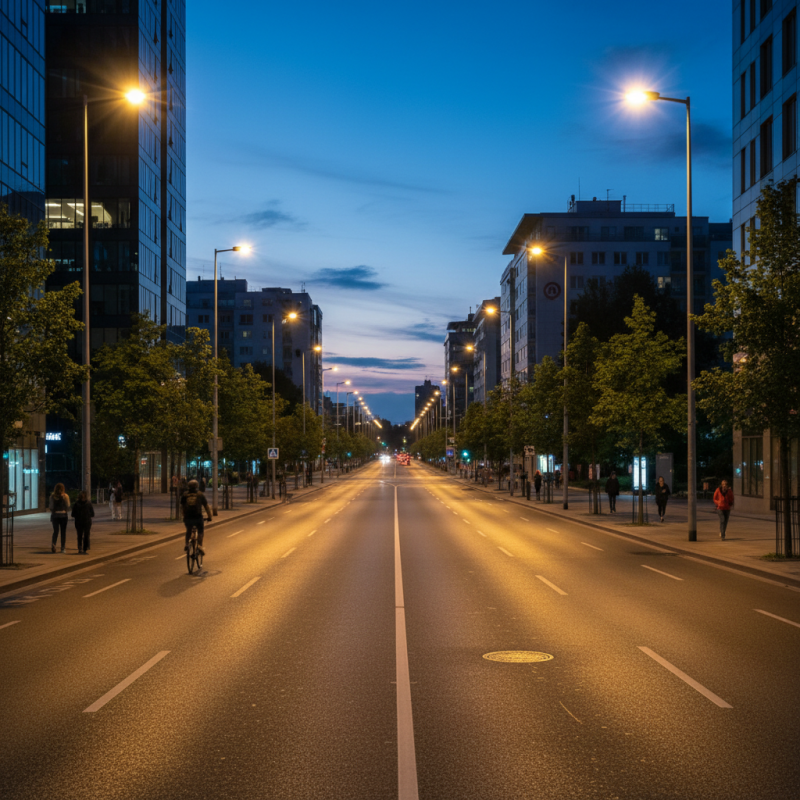
Proper street light spacing is crucial for safety. It ensures visibility on roads, enhances security, and minimizes accidents. Well-placed lights help drivers and pedestrians see where they are going. They also deter potential criminal activity. The right spacing balances brightness and shadows effectively.
Tips for calculating spacing include assessing the light's wattage and beam spread. A common guideline suggests that lights should be spaced 1.5 to 2 times their mounting height. Consider environmental factors, too. Trees or buildings can cast shadows, impacting light distribution. Regularly evaluate street light effectiveness through community surveys.
It's important to reflect on potential pitfalls. Overly spaced lights can create dark areas, increasing danger. Too close can lead to glare, blinding drivers. Avoiding these issues requires a careful assessment of each area’s unique needs. Adjust your calculations based on specific conditions and community feedback. Always prioritize safety and visibility.
When calculating spacing for street lights, various factors come into play. One key consideration is the illumination level required for the area. Different environments—such as busy streets or quiet neighborhoods—demand different lighting standards. The amount of light each fixture can produce affects how far apart they need to be. A highly illuminated road may require lights spaced further apart, while darker areas could necessitate closer placements.
Another factor is the type of light used. LED lights are more efficient and produce higher lumens per watt compared to traditional bulbs. This can lead to broader spacing benefits. Weather conditions also need consideration. Rain, fog, or snow can diffuse light, so additional fixtures might be required in regions with harsh weather.
It's important to reflect on these elements. Often, planners must balance cost and functionality. Overspending on excessive light fixtures can strain budgets, yet insufficient lighting can lead to safety risks. The goal is to find a middle ground that meets safety needs while managing costs effectively. Each project can reveal gaps in understanding optimal spacing, encouraging further research and adjustments.
When calculating street light placement, consider various factors. Illumination levels, pole height, and spacing are crucial elements. According to the Illuminating Engineering Society (IES), optimal spacing often ranges from 100 to 150 feet, depending on light type and area specifics. This expertise ensures safety and pedestrian visibility in urban settings.
Start by assessing the area. Identify the required brightness for effective illumination. For example, a well-lit intersection needs over 10 foot-candles. In contrast, residential streets may require only 1 foot-candle. Note that these levels can vary based on location and city regulations. It's essential to gather data on local environmental conditions and human activity levels.
Tips: Use software to simulate light distribution. It will allow you to visualize lighting effects and adjust placements accordingly. Regularly revisit your street lighting plan. Community feedback can highlight areas needing enhancement. Adjustments based on pedestrian needs and crime statistics are vital. Always consider future developments that may change light requirements.
When planning street light spacing, common mistakes can lead to poor visibility. Most municipalities underestimate the spacing requirements. According to the Illuminating Engineering Society (IES), lights should be spaced based on road width and height mounting. This can vary from 100 to 150 feet apart for standard roads.
One frequent error is ignoring existing light sources. Traffic studies indicate that redundancy in lighting increases safety. Experts suggest reviewing urban designs and accounting for ambient light from nearby sources. Additionally, comprehensive assessments help identify optimal heights and wattages. Failing to do this can result in dark spots.
Tips for efficient spacing: Measure the distance between poles to avoid gaps. Use photometric analysis to ensure uniform light distribution. Also, keep in mind the type of road and its surroundings. Stakeholders should collaborate closely. Regularly reassess the lighting plan based on community feedback. Adapt and refine the strategy to enhance safety and visibility. Having an adaptive approach is crucial for effective street light management.
| Parameter | Recommended Value | Common Mistakes | How to Avoid |
|---|---|---|---|
| Pole Height (feet) | 15-30 | Underestimating pole height | Conduct thorough height assessment |
| Spacing (feet) | 100-150 | Inconsistent spacing leading to dark areas | Use software for proper layout |
| Illuminance Level (lux) | 10-20 | Ignoring local regulations | Check local guidelines |
| Light Distribution | Type III or IV | Using incorrect light distribution type | Choose appropriate lighting design |
| Power Consumption (watts) | 100-400 | Overestimating power requirements | Analyze demand and efficiency |
Effective street light installation hinges on understanding optimal placement and maintenance strategies. A well-researched guideline from the Illuminating Engineering Society indicates that street lights should generally be spaced between 100 to 150 feet apart. This distance ensures adequate illumination while avoiding excessive overlaps. In urban areas, the spacing may reduce to around 75 feet to counteract the effects of surrounding buildings. Each installation must accommodate unique local conditions, such as road width and traffic patterns.
Moreover, regular maintenance is critical for preserving light efficiency. A study by the U.S. Department of Energy highlights that nearly 30% of street lights require maintenance at any given time. Cleaning fixtures and replacing burned-out bulbs can significantly enhance visibility. Additionally, incorporating smart technology, like remote monitoring, can help track light performance in real time. However, these systems can be resource-intensive. Cities must weigh installation costs against potential long-term savings and improved safety. Regularly reviewing maintenance data can uncover trends and areas for improvement.
: It enhances visibility, increases safety, and minimizes accidents on roads for both drivers and pedestrians.
Consider the light’s wattage, beam spread, and space lights 1.5 to 2 times their mounting height.
Environmental elements like trees, buildings, and local activity levels should be assessed for optimal placement.
Overly spaced lights can create dark areas, while lights too close can cause glare and blinding.
Regular community surveys can provide valuable feedback on visibility and safety perceptions in the area.
Intersections may need over 10 foot-candles, while residential streets require about 1 foot-candle.
It helps identify areas for improvement, ensuring that lighting meets pedestrian needs and safety concerns.
Yes, frequent evaluations allow for adjustments based on changes in community dynamics and urban developments.
Using software to simulate light distribution helps visualize effects and optimize light placements efficiently.
Local conditions, pedestrian feedback, and crime statistics should all guide spacing decisions and adjustments.
Proper street light spacing is crucial for ensuring adequate illumination, safety, and aesthetics in urban environments. Understanding the factors that influence this spacing, such as the type of light used, pole height, and the area being illuminated, is essential for effective planning. A step-by-step guide to calculating street light placement can greatly assist in achieving optimal brightness while minimizing energy consumption.
Common mistakes in street light spacing often include ignoring local regulations or failing to account for environmental variables. By recognizing these pitfalls and implementing best practices for installation and maintenance, municipalities can effectively enhance public safety and improve the quality of urban life. In summary, knowing how to calculate the spacing between street lights can lead to more efficient lighting solutions that benefit communities as a whole.
Star Lighting