Choosing a qualified street light is not merely a matter of comparing wattage, price, or visual design. What certifications should qualified street lights have is a practical question for municipalities, contractors, and property owners. The answer depends on the installation country, roadway classification, and procurement standards. A reliable product should provide traceable safety evidence, verified photometric performance, and clear manufacturing information.
Look for recognized marks such as UL or ETL in North America, and CE documentation for applicable European markets. RoHS compliance can confirm restricted substances are controlled. DLC listing may support energy-efficiency incentives, although it is not a universal safety certification. Reports based on LM-79 can verify measured light output, distribution, and electrical performance. LM-80 and TM-21 data can help evaluate LED life, but they do not guarantee every installed fixture will reach its rated hours.
Weather protection matters outdoors. Check IP ratings for water and dust resistance, plus IK ratings where impact protection is important. However, labels alone are not enough. Ask for current certificates, test reports, model numbers, and certification databases that match the exact product. I have seen specifications look impressive until a small suffix revealed a different, untested version. That detail matters.
Local approval still matters. Standards change.
A qualified supplier should explain warranty terms, surge protection, thermal testing, and maintenance support without vague promises. Reviewers should also question overly precise lifetime claims, because heat, voltage variation, pollution, and installation quality can shorten real performance. Good certification reduces uncertainty, but careful verification completes the decision.
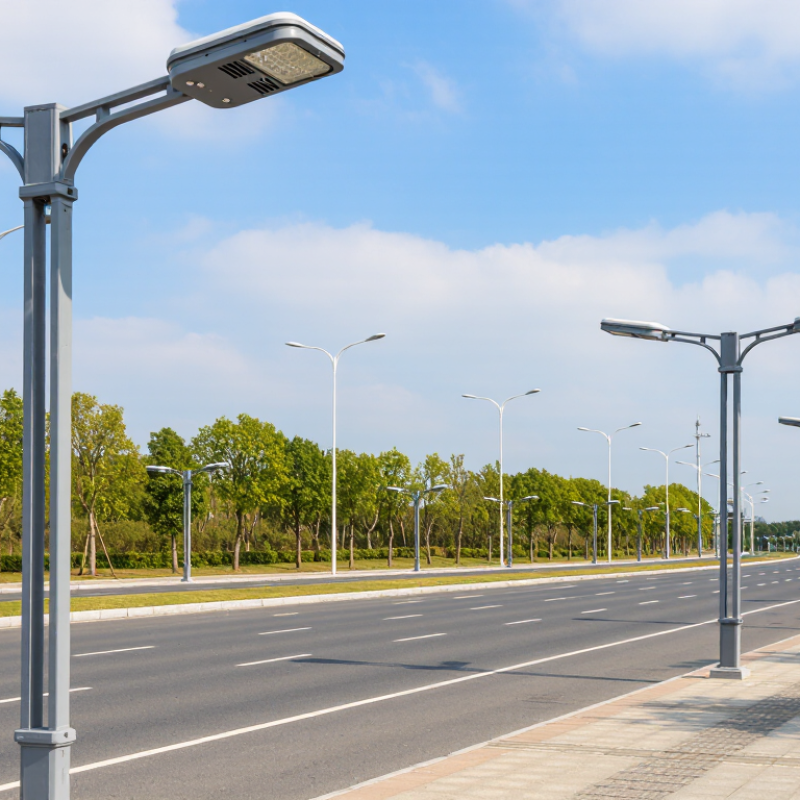
Street light certification means more than printing a compliance mark on a housing. It shows that an independent process has examined safety, performance, and durability. Qualified products should have electrical safety certification for insulation, grounding, heat control, and protection against electric shock. Electromagnetic compatibility testing also matters. Poorly controlled equipment can disturb nearby communication or control systems.
Look for testing related to ingress protection and impact resistance. A sealed enclosure should protect internal parts from rain, dust, and condensation. Impact testing helps assess damage from stones, maintenance tools, or severe weather. Photobiological safety evaluates whether the light creates unsafe glare or excessive optical exposure. Energy performance documents should state power consumption, light output, efficiency, and operating conditions. These details make comparisons more reliable.
Certification is useful only when its scope is clear. Check the certificate number, testing laboratory, product model, test date, and applicable standard. An accredited laboratory and traceable report add professional credibility. Local installation rules may also require separate approvals, even when a product passes general tests. A common mistake is trusting a familiar label without reading its limitations. Certification cannot guarantee perfect field performance. Road width, mounting height, temperature, and maintenance change the result. In practice, a light may pass laboratory testing yet produce uncomfortable glare on wet pavement. That gap deserves honest review, not convenient assumptions.
A qualified street light should carry electrical safety certification for its target market. The certificate must match the complete luminaire, not only its LED module or driver. Relevant testing usually follows IEC 60598-1 and IEC 60598-2-3 for road lighting equipment. These standards examine insulation, heating, electric shock protection, wiring, and mechanical strength. Regional conformity marking may also be required.
Look closely at the test scope.
Electromagnetic compatibility is another essential area. Reports should reference suitable emission and immunity standards, such as IEC 55015 and IEC 61547. A compliant light should not disturb nearby controls, communication systems, or medical equipment. The enclosure also needs verified ingress protection under IEC 60529. Outdoor units often require impact testing under IEC 62262, especially near roads or public spaces. Photobiological safety assessment, commonly based on IEC 62471, helps evaluate risks from intense optical radiation.
Certificates should be current and traceable. Check the model number, rated voltage, test laboratory, and production location. Inspectors should compare these details with the nameplate and delivered sample. A small design change can invalidate an earlier report. This point is often missed. RoHS documentation may support environmental compliance, but it is not a replacement for electrical safety certification. In practice, paperwork alone cannot prove field reliability. Thermal performance, sealing quality, and installation instructions still deserve careful review.
Qualified street lights need more than a safety mark on the housing. Electrical compliance should reference IEC 60598-2-3 for road and street luminaires, with documented insulation, grounding, ingress protection, and surge testing. IEC 61000 series tests also address electromagnetic compatibility. A useful certificate identifies the test laboratory, sample configuration, rated voltage, and production date. Generic declarations are weak evidence.
Photometric compliance requires measured data, not catalogue promises. IES LM-79 supports laboratory testing of complete solid-state luminaires, including luminous flux, efficacy, color characteristics, and power input. IES LM-80 and TM-21 help evaluate LED lumen maintenance, but they do not replace whole-fixture testing. CIE 115 and EN 13201 guide road-lighting performance, including maintained illuminance, uniformity, glare, and adaptive lighting conditions. The International Energy Agency reports that lighting represents about 15% of global electricity consumption, so poor optical control creates measurable waste.
A practical review should compare the photometric file with the installed pole height, spacing, road width, and maintenance factor. Check the exact driver and lens combination. Small changes matter. A certificate alone proves little if the tested model differs from the delivered unit. This is where procurement often becomes imperfect: documents may look complete, while field measurements reveal glare, dark patches, or unexpected power demand. Independent sampling and on-site verification remain sensible safeguards.
A qualified street light should carry certifications supported by clear environmental and structural test evidence. Certification names vary by market, so buyers should check local electrical and safety requirements. An accredited laboratory should issue reports with the exact model, test sample, and test date. Generic certificates are not enough.
Environmental testing should reflect real installation conditions. In coastal areas, salt spray testing can reveal corrosion around screws, brackets, and cable entries. Thermal cycling checks whether seals crack after repeated heating and cooling. Humidity, ultraviolet exposure, dust, and water-ingress tests are also important. An appropriate IP rating helps confirm protection against moisture and particles. However, outdoor conditions are rarely consistent. Laboratory results cannot reproduce every season, storm, or maintenance error.
Structural certification should examine wind load, vibration, impact resistance, and mounting strength. Engineers should review the pole connection, housing, bolts, and adjustment mechanism as one system. A street light may survive a static load but loosen after months of traffic vibration. That detail is easy to miss. Test records should identify load values, mounting angles, failure limits, and inspection methods. Factory quality controls matter too, including torque checks and material traceability. A certificate alone can mislead when production changes later. Careful buyers should request updated documents, installation guidance, and evidence that tested samples match delivered units. Some assumptions will still need review.
| Testing Area | Certification, Standard or Test Method | What Should Be Verified | Typical Evidence | Typical Acceptance Considerations |
|---|---|---|---|---|
| Product Safety | IEC 60598-1 and IEC 60598-2-3, or the applicable national equivalent | Protection against electric shock, abnormal operation, heating, insulation failure, wiring faults and mechanical hazards in road and street lighting equipment. | Independent laboratory test report, construction review, dielectric-strength results and production inspection records. | The complete luminaire configuration should be tested, including the housing, driver, controls, wiring and mounting arrangement. |
| Ingress Protection | IEC 60529 | Resistance of the enclosure to dust and water entering the electrical and optical compartments. | IP test report identifying the tested product configuration and enclosure classification. | The required IP level depends on exposure. Outdoor road luminaires commonly require a high level of protection, often IP65 or higher, subject to the project specification. |
| Impact Resistance | IEC 62262 | Resistance of the enclosure, lens and exposed components to mechanical impact. | IK rating test report and photographs of the tested assembly before and after impact testing. | The selected IK rating should reflect vandalism risk, roadside exposure, maintenance activity and the vulnerability of the optical cover. |
| Damp Heat and Humidity | IEC 60068-2-30 and IEC 60068-2-78 | Resistance to cyclic damp heat and steady-state humidity that can cause condensation, corrosion, insulation deterioration or electronic failure. | Environmental test report, insulation measurements and functional checks after exposure. | No unsafe condensation, loss of electrical insulation, unacceptable corrosion or permanent reduction in required lighting performance should occur. |
| Temperature Cycling | IEC 60068-2-14 and the manufacturer’s declared operating-temperature range | Ability to withstand repeated hot and cold transitions that may stress seals, solder joints, lenses, gaskets and electronic components. | Temperature-cycle report, visual inspection, electrical safety checks and post-test photometric verification. | The declared ambient-temperature range should match the installation location, including solar loading and heat generated inside the luminaire. |
| Salt Mist and Corrosion | ISO 9227 or ASTM B117, together with the applicable material and coating specification | Resistance of painted, plated, anodized or otherwise protected parts to salt-laden atmospheres, especially in coastal or de-icing environments. | Salt-spray report, coating-thickness records, adhesion results and post-test corrosion assessment. | Test duration and corrosion limits must be defined by the project specification; salt-spray duration alone does not predict every outdoor service environment. |
| UV and Weathering | ISO 4892-2, ISO 4892-3 or another specified accelerated-weathering method | Resistance of polymers, lenses, gaskets, coatings and labels to ultraviolet radiation, moisture and outdoor weathering. | Accelerated-weathering report, color-change assessment, mechanical inspection and optical-transmission results where applicable. | The test method, exposure cycle and performance limits should be stated because accelerated weathering does not directly equal a fixed number of outdoor years. |
| Vibration and Mechanical Shock | IEC 60068-2-6, IEC 60068-2-27 and the project-specific road or bridge vibration profile | Resistance to vibration, shock, loosening, fatigue and damage during transport and long-term installation on a pole or bracket. | Vibration and shock report, fastener inspection, torque verification and operational test after exposure. | The test fixture should reproduce the actual mounting interface, mass distribution and cable arrangement as closely as practicable. |
| Wind and Structural Load | Applicable structural design code, such as EN 40 for lighting columns or the local wind-loading code | Adequacy of the luminaire, bracket, spigot, pole interface and fasteners under wind pressure, projected area, weight and dynamic effects. | Structural calculations, material certificates, finite-element analysis where appropriate and load-test results when specified. | Wind speed, terrain category, height, exposure, projected area and mounting orientation must be based on the actual installation site. |
| Thermal Management | IEC 60598-1 temperature tests and the declared LED, driver and ambient-temperature limits | Control of LED junction-related stress, driver temperature, enclosure temperature and accessible-surface temperature. | Thermal test report, temperature measurements at critical components and lumen-maintenance or life calculation. | Results should be based on the complete luminaire, including the final mounting position and the specified maximum ambient temperature. |
| Electrical Transients and Surge | IEC 61000-4-5 and the surge requirements specified for the intended supply system | Resistance to conducted surges caused by switching events, lightning-related disturbances and supply-network transients. | Surge-immunity report, protection-device specification and post-test functional and insulation checks. | The required surge level depends on the installation category, earthing arrangement, overhead wiring and local authority requirements. |
| Electromagnetic Compatibility | CISPR 15 and IEC 61547, or the applicable regional EMC requirements | Limits on radio-frequency emissions and immunity to electromagnetic disturbances during normal operation. | EMC laboratory report covering emissions, immunity and operating modes, including dimming or control functions. | The tested driver, control gear, sensors and communication modules should match the equipment supplied for installation. |
| Photometric Performance | LM-79 or an equivalent recognized luminaire photometric test method; applicable road-lighting performance standards | Luminous flux, luminous efficacy, electrical power, distribution, glare-related data, color characteristics and roadway illumination performance. | Accredited photometric report, luminous-intensity distribution file and installation-specific lighting calculation. | Measured data should correspond to the exact LED package, optical system, driver current, correlated color temperature and operating mode supplied. |
| LED Lifetime and Lumen Maintenance | IES LM-80 for LED light sources and IES TM-21 for lumen-maintenance projection, where applicable | Expected lumen maintenance of the LED system and the conditions used to estimate useful service life. | LM-80 data, TM-21 projection, in-situ temperature measurements and a documented life-maintenance model. | Projected life should not be presented as a universal guarantee; it depends on temperature, drive current, optics, contamination and maintenance conditions. |
| Materials and Restricted Substances | Applicable substance-restriction, waste-electrical-equipment and material-declaration regulations | Compliance of electrical components, plastics, metals, solder and coatings with legal restrictions in the destination market. | Supplier declarations, material declarations, laboratory screening reports and conformity documentation. | Requirements vary by jurisdiction. Documentation should cover the complete luminaire and any replaceable control gear. |
| Quality and Traceability | Quality-management system based on ISO 9001 or an equivalent documented system | Consistency of materials, critical components, assembly processes, inspection and change control. | Quality certificate, inspection plan, serial-number records, calibration records and production test results. | A management-system certificate does not replace product testing; both manufacturing controls and product-specific compliance evidence are needed. |
Qualified street lights should carry certifications suited to their installation environment and target market. Common evidence includes electrical safety, electromagnetic compatibility, ingress protection, impact resistance, and photobiological safety. Environmental compliance may also matter. Requirements vary by region and project type. A certificate alone is not enough.
Before installation, request the original certificate and its complete test report. Check the certificate number on the issuing organization’s official database or verification portal. Confirm the listed model, rated voltage, manufacturer, factory address, and product description. These details must match the fixture delivered to the site. Even a small model suffix can indicate a different construction.
Check the issue date, expiry date, and certification scope carefully. Some documents cover only a component, not the complete street light. Others apply to one factory or production series. Ask whether surveillance audits remain current. An accredited testing laboratory should be identifiable, with contact details that work independently of the seller. Do not rely on a printed logo or scanned signature.
A practical inspection also compares the certificate with the nameplate, packaging, and installation manual. Photograph these records before mounting the light. Keep them with the project file. I have seen valid documents attached to outdated products, which is an easy mistake to miss. Rechecking everything takes time, but skipping one model number can create expensive uncertainty later.
It should cover the complete luminaire, not only the LED module or driver. Testing commonly examines insulation, grounding, heating, wiring, shock protection, and mechanical strength.
The model number, voltage, factory, and construction must match the tested product. A small design change can invalidate earlier evidence. This detail is easy to miss.
Request emission and immunity test results under suitable electromagnetic compatibility standards. The light should not disturb nearby controls, communication equipment, or sensitive medical devices.
Check ingress protection for rain and dust. Impact resistance may also matter near roads, walkways, and public areas. The enclosure needs dependable sealing.
Request measured data for luminous flux, efficacy, color, and power input. Review the complete luminaire, not only separate LED component data.
Obtain the original certificate and complete test report. Verify its number through the issuing organization’s official database. Confirm the model, voltage, factory address, and product description.
Compare the certificate with the nameplate, packaging, installation manual, and delivered sample. Photograph these records before installation. Keep them in the project file.
No. They provide important evidence, but field conditions may reveal glare, dark patches, weak sealing, or higher power demand. On-site measurements remain sensible.
Compare the file with pole height, spacing, road width, and maintenance factor. Check the exact driver and lens combination. Small differences can change lighting results.
No. Environmental documents may support material compliance, but they do not replace electrical safety testing. Paperwork can look complete. It can still be insufficient.
What certifications should qualified street lights have? Qualified street lights should carry certifications that demonstrate safety, reliability, energy efficiency, and suitability for outdoor use. Core safety certifications confirm that the equipment has been evaluated for electrical protection, insulation, fire resistance, and safe operation. Electrical and photometric standards are also important because they verify correct voltage performance, electromagnetic compatibility, light distribution, brightness, glare control, and color quality. These requirements help ensure that street lights provide consistent illumination without creating unnecessary hazards or excessive energy use.
Environmental and structural testing should confirm resistance to rain, dust, corrosion, temperature changes, vibration, and wind loads. Before installation, buyers should verify that certificates are issued by recognized testing organizations, remain valid, match the exact product model, and cover the intended operating conditions. Checking test reports, certification numbers, product labels, and manufacturer documentation can help identify reliable equipment and prevent the use of outdated or inaccurate claims. Together, these certifications support safer roads, longer service life, easier maintenance, and compliance with project requirements.

Star Lighting