How to choose the best street lights for public roads in 2026?

Time:2026-03-20 Author:Henry
0%

Choosing the right street lights for public roads is crucial for urban safety and aesthetics. In 2026, optimal solutions must balance efficiency and functionality. According to the International Light Association, nearly 80% of urban areas suffer from inadequate street lighting, leading to increased accidents and crime rates.

Expert Jamie Thomason, who frequently discusses urban planning, emphasizes, "Proper lighting can transform public spaces and enhance community well-being." This highlights the importance of a strategic approach in selecting street lights. Various factors are essential—energy efficiency, lumens per watt, and environmental impact all play pivotal roles. It's not just about illumination; it’s about creating a welcoming environment.

Moreover, with ever-evolving technology, street lighting must adapt. Smart lighting systems can reduce energy use by 50%, demonstrating that modern choices are both effective and economical. However, one must reflect on how budget constraints sometimes limit the best options. Evaluating durability and maintenance is vital, yet often overlooked. In this quest, stakeholders must keep community needs at the forefront while learning from past oversights. Ultimately, understanding how to choose the right street lights for public roads is pivotal for creating safer, more inviting cities.
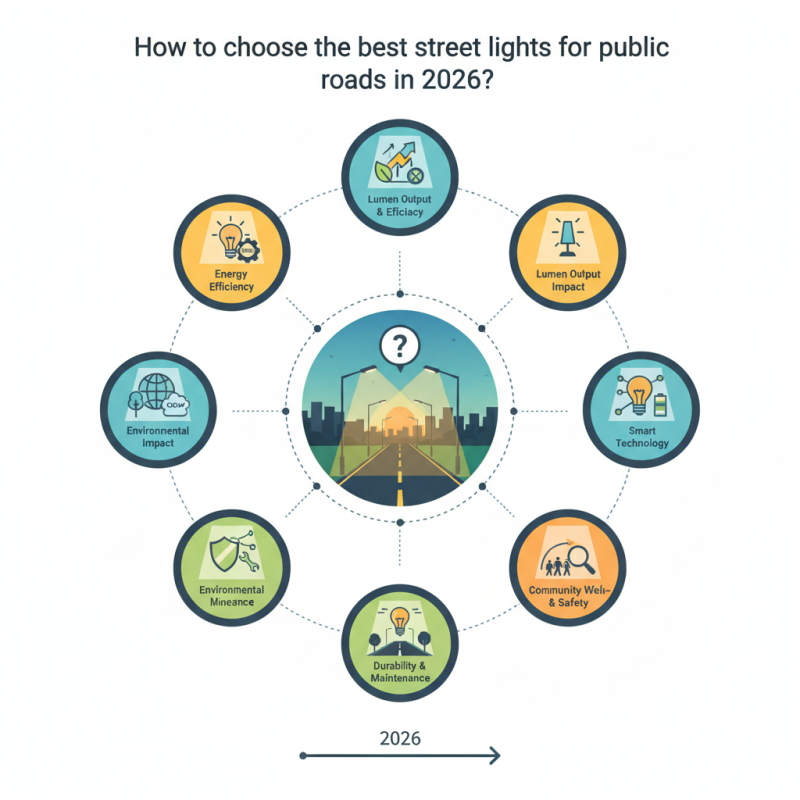
How to choose the best street lights for public roads in 2026?

Identifying Key Factors for Street Light Selection in Public Roads

Choosing the best street lights for public roads involves careful consideration of several key factors. One critical aspect is the type of lighting technology. LED lights are popular for their energy efficiency. However, some older models can cast an unpleasant glare. Street lights should illuminate the road evenly, avoiding dark spots.

Another important factor is the color temperature of the light. Warmer lights create a more inviting atmosphere, while cooler lights might enhance visibility. Yet, if chosen improperly, they can wash out colors. It’s essential to balance brightness with comfort. Community feedback can help identify issues with existing street lights, leading to better options in the future.

The design of the street lights should also blend with the environment. Aesthetic considerations matter, especially in historic areas. Infrastructure must support maintenance needs as well. Lights that are hard to reach can become neglected. Ultimately, it’s not just about light; it’s about creating safe, pleasant spaces for all.

Evaluating Energy Efficiency and Sustainability in Street Lighting

In 2026, choosing street lights for public roads involves more than just illumination. Energy efficiency and sustainability are crucial factors. According to recent industry reports, street lighting accounts for nearly 30% of a city's total energy consumption. Transitioning to LED technology can reduce this by 50% or more. However, not all LED lighting is created equal.

Understanding the lifespan of different lighting solutions is vital. High-quality LEDs can last up to 25,000 hours, but cheaper alternatives may fail much sooner. This raises questions about long-term costs versus initial investments. Furthermore, energy sources matter. If a streetlight relies on non-renewable energy, its sustainability is undermined. What's the point in reducing energy consumption if the source is harmful?

Community needs cannot be overlooked. Brightness levels play a role in safety and visibility. Overly bright lights might create glare and reduce comfort. Cities must balance aesthetics, safety, and energy demands. Reports indicate that residents often prefer lights that enhance the urban environment rather than disrupt it. This ongoing dialogue between technology and community preferences will shape the future of street lighting.

Assessing Illumination Levels for Safety and Visibility in Urban Areas

In urban areas, the safety of pedestrians and drivers is crucial. Proper street lighting can significantly enhance visibility and reduce accidents. When selecting street lights, assessing illumination levels is essential. Adequate brightness allows drivers to see clearly and helps pedestrians navigate safely after dark.

Many cities use strict guidelines for illumination levels. Standards suggest a minimum light level for public roads. However, some areas still struggle with insufficient lighting. This can create blind spots, increasing the risk of accidents. Evaluating the specific needs of each road type is necessary. For instance, busy intersections might require brighter lights than quiet residential streets.

People often overlook the design and placement of street lights. Poorly positioned lights can result in glare or shadowed areas. Continuous monitoring and feedback can identify these issues. Engaging the community during this process can help ensure that lighting choices reflect public safety needs. Ultimately, a safer urban environment relies on thoughtful consideration of illumination levels.

How to choose the best street lights for public roads in 2026? - Assessing Illumination Levels for Safety and Visibility in Urban Areas

Criteria Recommended Value Impact on Safety Environmental Considerations
Luminous Efficacy (lm/W) 100 - 150 Higher efficacy improves visibility, reducing accidents. Lower energy consumption leads to a smaller carbon footprint.
Color Temperature (K) 3000 - 4000 Warmer temperatures enhance visibility and comfort. Reduction in light pollution compared to higher temperatures.
Illuminance Level (lux) 15 - 25 Ensures safe pedestrian and vehicle movement. Optimal lighting affects local wildlife less adversely.
Maintenance Cycle (years) 5 - 7 Regular maintenance ensures consistent lighting, improving safety. Longer lifespan reduces waste and resource use.
Smart Technology Integration Yes Enhances safety through adaptive lighting controls. Potential for energy savings and CO2 reduction through smart grids.

Exploring Smart Technology Integration in Future Street Lighting

Street lighting in 2026 must embrace smart technology. Cities face rising energy costs and the need for sustainability. Reports indicate that smart street lights can reduce energy consumption by up to 50%. In addition, they can enhance safety through improved visibility and real-time monitoring. Integrating sensors into street lights can help manage traffic and reduce congestion in urban areas.

However, deploying this technology carries challenges. There is a learning curve for city planners and maintenance teams. Many communities lack the necessary infrastructure to support smart street lighting. Furthermore, cybersecurity is a primary concern. If street lights connect to the internet, they may become targets for hackers. It's crucial for cities to approach this integration cautiously and thoughtfully.

Connectivity is essential. Studies suggest that around 70% of municipalities plan to invest in smart technologies. They aim to improve public services and energy efficiency. Yet, without clear guidelines, projects might lack coherence. Ensuring proper training for staff and public engagement is essential. Cities should consider the long-term implications of these investments.

Considering Aesthetic Design and Community Impact for Street Lights

Choosing street lights for public roads involves more than just illumination. Aesthetic design plays a crucial role in community impact. A well-designed street light can enhance the visual appeal of an area. It can unify the streetscape, complement existing architecture, or even create a signature look for a neighborhood. Consider using materials and styles that resonate with local culture. For example, rustic designs may suit historical districts, while sleek, modern lights fit urban environments better.

However, it’s important to think beyond aesthetics. The functionality of street lights must not be overlooked. Brightness levels should be appropriate to ensure safety without causing light pollution. This balance is delicate; too much light can detract from nighttime charm. The wrong choice may lead to frequent complaints from community members. Street lighting should be inviting, not intrusive. Taking into account community feedback during the selection process is vital. Engaging with residents can help avoid costly mistakes. Ultimately, street lights are more than fixtures; they shape the experience of public spaces.

Public Preferences for Street Light Features in 2026

FAQS

: What is a key factor in selecting street lights?

: The type of lighting technology is crucial, with LED lights being popular for energy efficiency.

Why is color temperature important for street lights?

Color temperature affects ambiance and visibility; warmer lights are inviting, while cooler lights enhance visibility.

How can community feedback influence street lighting choices?

Community feedback helps identify issues with current lights, leading to better future choices.

What aesthetic considerations should be made for street lights?

The design should blend with the environment, especially in historic areas, to enhance the area’s appeal.

What are the benefits of smart street lighting?

Smart street lights can reduce energy consumption by up to 50% and improve safety through monitoring.

What challenges exist in deploying smart street lighting?

There is a learning curve for planners, and some areas lack the necessary infrastructure to support it.

Why is cybersecurity a concern for smart street lights?

If connected to the internet, street lights may become targets for hackers, posing safety risks.

What percentage of municipalities plan to invest in smart technologies?

About 70% of municipalities plan to invest in smart technologies to enhance public services.

How important is staff training for implementing smart technology?

Proper training is essential to ensure successful implementation and ongoing maintenance of these systems.

What are potential downsides to smart street lighting investments?

Without clear guidelines, projects may lack coherence, leading to ineffective implementation and wasted resources.

Conclusion

In the quest for determining "How to choose the right street lights for public roads," several key factors must be carefully evaluated. First, identifying the fundamental criteria for selecting street lights is essential, including energy efficiency and sustainability, which are increasingly critical in modern urban planning. Additionally, assessing appropriate illumination levels is vital for ensuring safety and visibility, particularly in densely populated areas where traffic and pedestrian movement are high.

Moreover, the integration of smart technology into street lighting systems can enhance functionality and efficiency, making streets safer and more accessible. Finally, considering the aesthetic design and community impact of street lights helps create an environment that reflects the local culture and meets the needs of residents. By focusing on these aspects, stakeholders can make informed decisions that benefit both urban infrastructure and the community as a whole.

Henry

Henry

Henry is a dedicated marketing professional with a profound expertise in the company's offerings. With years of experience in the industry, he possesses an impressive understanding of the market dynamics and consumer behaviors that drive success. Henry is committed to sharing his insights through......