Why Choosing the Right Street Lights for Highways and Rural Roads Matters?

Time:2026-05-25 Author:Isabella
0%

Choosing the right street lights for highways and rural roads is essential for safety and efficiency. Proper lighting ensures visibility for drivers and pedestrians alike. It reduces accidents and enhances travel comfort. In these diverse settings, the lighting needs can vary significantly.

How to choose street lights for highways and rural roads involves considering factors like brightness, durability, and energy efficiency. Highway lights often require higher lumens for fast-moving vehicles. In contrast, rural roads benefit from softer lighting to avoid harsh glares. Both settings demand fixtures that withstand weather conditions.

Selecting street lights is not just a technical decision; it reflects community priorities. Improper choices can lead to dark spots, reducing safety. Lighting plays a crucial role in deterring crime and improving public spaces. Thus, understanding the unique requirements of highways and rural areas is vital for making informed decisions.
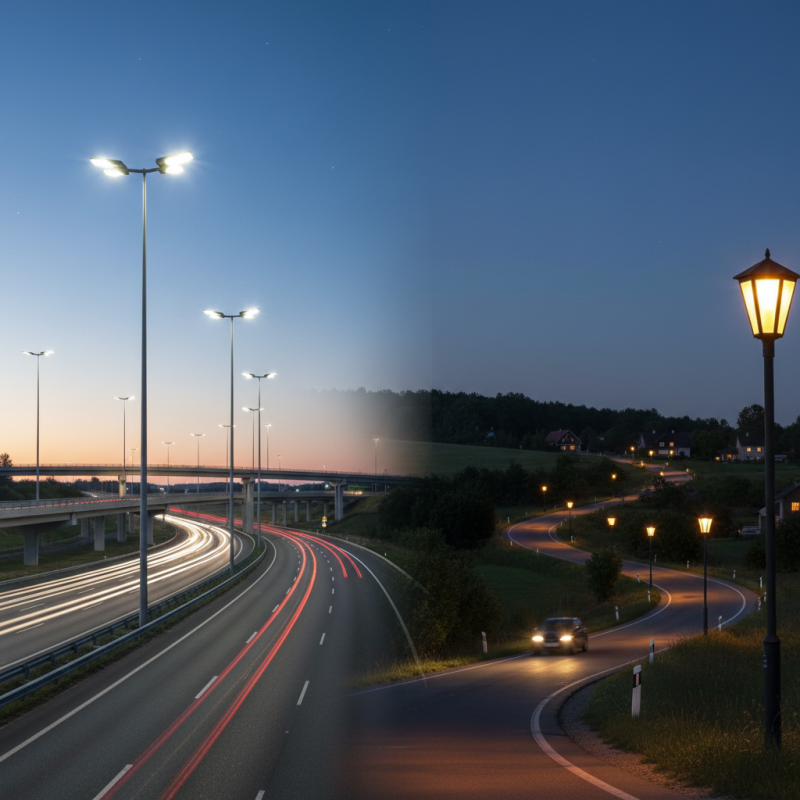
Why Choosing the Right Street Lights for Highways and Rural Roads Matters?

Importance of Highway and Rural Road Lighting in Safety and Visibility

Highway and rural road lighting significantly impacts safety and visibility. According to the Federal Highway Administration, poorly lit roads boost accident rates. Notably, nighttime collisions increase by 27% on unlit rural roads. Effective lighting transforms dark roads into safer transit paths.


The right street lights enhance visibility for drivers and pedestrians alike. Appropriate illumination reduces glare and shadowy areas. Studies show that well-lit environments deter accidents by up to 40%. Good lighting enables drivers to react quicker to hazards.


However, not all lighting solutions are created equal. Some lights fail to provide adequate coverage and can lead to misjudgment. Additionally, over-lighting can cause discomfort and reduced visibility. Stakeholders must continually evaluate their lighting choices to ensure maximum safety. With the right approach, rural roads can be made significantly safer for everyone.

Types of Street Lights Suitable for Highways and Rural Roads

When it comes to highway and rural road safety, the choice of street lights plays a crucial role. Proper illumination can significantly decrease accident rates. According to the National Highway Traffic Safety Administration, well-lit roads can reduce nighttime collisions by up to 30%. This highlights the importance of selecting suitable lighting solutions.

LED lights are one of the preferred options for both highways and rural roads. They have a long lifespan and energy efficiency, reducing maintenance costs and light pollution. The U.S. Department of Energy reported that LED street lights could save approximately 50-75% in energy consumption compared to traditional incandescent lights. However, not all LEDs are created equal. Choosing the right color temperature and lumens is essential for safety and visibility, especially in rural areas where wildlife may pose additional hazards.

Solar-powered street lights offer a sustainable alternative. These lights use photovoltaic panels to harness solar energy. They are particularly useful in remote areas where electricity supply can be inconsistent. Yet, the reliance on sunlight can lead to situations where lights may not function during prolonged cloudy weather. Ensuring that these lights have battery backup systems is essential for reliability in critical times. Overall, careful consideration of these options is important for effective road safety and illumination.

Why Choosing the Right Street Lights for Highways and Rural Roads Matters? - Types of Street Lights Suitable for Highways and Rural Roads

Type of Street Light Energy Source Average Brightness (Lumens) Lifespan (Years) Ideal Application
LED Lights Electric 800 - 1600 15 - 20 Highways, Rural Roads
Solar Lights Solar 600 - 1200 5 - 10 Rural Areas, Remote Locations
HID Lights Electric 3000 - 12000 2 - 5 High Traffic Areas, Highways
Fluorescent Lights Electric 1500 - 3000 7 - 10 Low Traffic Roads

Impact of Proper Lighting on Driver Behavior and Accident Prevention

Many drivers underestimate the importance of proper lighting on highways and rural roads. Adequate street lighting influences how motorists react under various conditions. Studies show well-lit roads significantly reduce accidents and enhance visibility. Drivers can perceive obstacles earlier and make quicker decisions. This can be the difference between a collision and a safe journey.

Improper lighting may lead to increased anxiety for drivers. Dim or poorly placed lights create blind spots. These areas can surprise even the most vigilant driver. Moreover, inconsistent lighting causes confusion. Motorists may misjudge their speed or distance to other vehicles. Attention should be on creating environments where drivers feel secure and in control.

In rural settings, lighting tends to be neglected. Country roads may seem void of dangers, but they can be treacherous. Wildlife crossings and unmarked hazards lurk in the shadows. By investing in thoughtful lighting designs, communities can foster safer travel. Reflection and careful planning in road lighting are essential. Our choices can save lives and improve overall safety.

Environmental and Economic Considerations in Street Light Selection

Selecting the right street lights for highways and rural roads involves more than just illumination. Environmental factors play a significant role. For instance, the type of light used can affect local wildlife. Certain LED lights attract fewer insects, which benefits the ecosystem. This helps maintain the natural balance in these areas.

Economic considerations cannot be overlooked. Energy-efficient lights reduce electricity costs over time. Many municipalities face tight budgets. Choosing the right lighting can lead to substantial savings. However, installation costs can be higher for advanced systems. Some areas may not see immediate returns on these investments. Therefore, thorough analysis is essential.

Implementing smart lighting solutions also introduces complexity. While they offer real-time monitoring, they require ongoing maintenance and infrastructure. Mismanagement in this area can lead to wasted resources. Maintaining reliability should be a priority. Balancing innovation with practical needs is crucial for long-term success.

Technological Advancements in Street Lighting for Enhanced Efficiency

The choice of street lights is crucial for highways and rural roads. Recent technological advancements have made it possible to enhance lighting efficiency significantly. Modern LED systems consume less energy, reducing operational costs. They also offer longer lifespans, which means less frequent replacements and maintenance. This both saves money and minimizes disruption on busy roads.

Smart lighting technology is another exciting development. Sensors can adjust brightness based on traffic flow or ambient light. This feature is particularly beneficial during late-night hours or in rural areas with little traffic. Reduced lighting during low-traffic times can save energy while still ensuring safety.

While these advancements are promising, there are challenges. Installing new systems can be expensive upfront. Decision-makers must weigh the initial costs against the long-term benefits. Not all rural areas may have the necessary infrastructure to support smart technology. Adopting these innovations requires careful planning and community input. Recognizing these complexities is essential for moving forward effectively.

FAQS

: What type of street lights are best for highways and rural roads?

: LED lights are preferred for highways and rural areas due to their long lifespan and energy efficiency.

How do LED street lights impact energy consumption?

LED lights can save about 50-75% in energy costs compared to traditional incandescent lights.

What is a potential drawback of solar-powered street lights?

They may not function well during prolonged cloudy weather without battery backup systems.

Why should environmental factors be considered when choosing street lights?

Some lights can attract fewer insects, benefiting local wildlife and maintaining the ecosystem.

Are smart lighting solutions cost-effective for municipalities?

They can reduce energy costs but may have higher installation expenses compared to traditional lights.

How do smart lighting systems enhance road safety?

They adjust brightness based on traffic flow, saving energy while maintaining safety in low traffic conditions.

What challenges come with implementing advanced lighting technologies?

High upfront costs and lack of necessary infrastructure in some rural areas can complicate implementation.

Why is maintenance important for smart lighting systems?

Mismanagement can lead to wasted resources, emphasizing the need for ongoing upkeep.

How can choosing the right street lighting affect accident rates?

Proper illumination can significantly reduce nighttime collisions, improving overall road safety.

What should be considered in the long-term planning of street lighting?

Balancing innovation with practical needs and community input is crucial for effective development.

Conclusion

Choosing the right street lights for highways and rural roads is crucial for ensuring safety and visibility. Effective lighting significantly enhances driver awareness, helping to prevent accidents and improve overall road safety. Various types of street lights, including LED and solar-powered options, can be chosen based on specific needs, considering their efficiency and maintenance requirements.

Additionally, understanding the impact of proper lighting on driver behavior is essential; well-lit roads encourage cautious driving and reduce the likelihood of accidents. Environmental and economic considerations also play a vital role in the selection process, as energy-efficient lighting solutions can lower electricity costs and reduce environmental impact. Lastly, advancements in street lighting technology continue to improve performance, making it easier for municipalities to address the unique challenges of rural and highway lighting. When considering how to choose street lights for highways and rural roads, these factors are integral to creating safer travel environments.

Isabella

Isabella

Isabella is a dedicated marketing professional with a sharp focus on driving brand growth and engagement through strategic content creation. With an extensive background in digital marketing, she combines her passion for storytelling with her keen understanding of industry trends to deliver......