How Do Motion Sensors Work in Street Lighting?

Time:2026-10-31 Author:Charlotte
0%

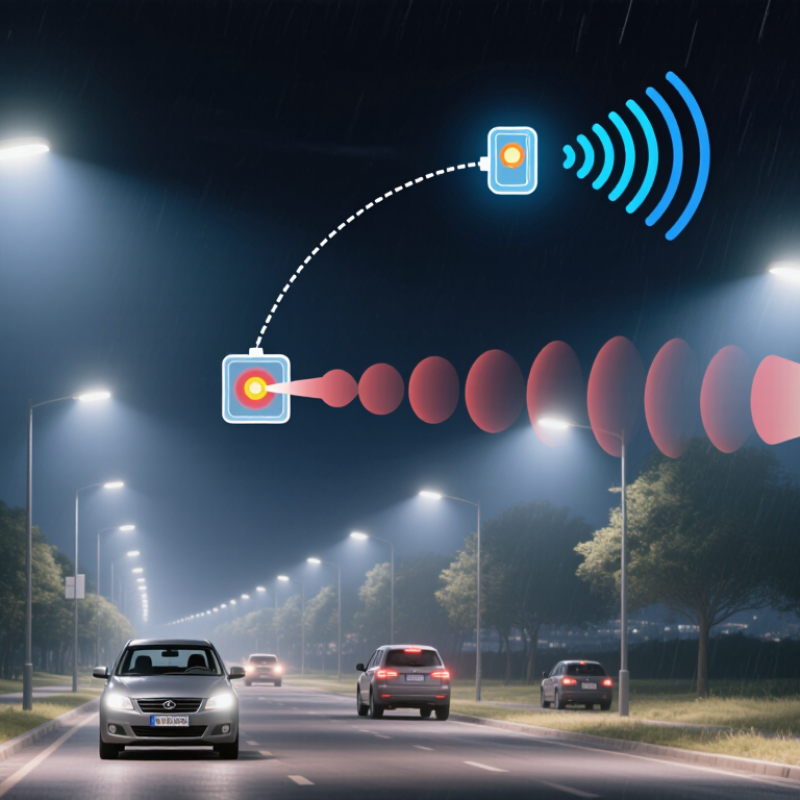
How do motion sensors work in street lighting? They detect nearby movement and use that signal to adjust a lamp’s output. A pedestrian approaches a quiet road. A vehicle turns into a residential lane. The sensor recognizes changing heat patterns or reflected waves, depending on its technology, and sends a command to the lighting controller.

Most systems combine a sensor, control unit, and dimmable LED fixture. Passive infrared sensors respond to shifts in body heat, while microwave sensors emit radio waves and measure returning signals. Some installations use both methods to reduce missed detections, though performance still depends on placement, weather, and nearby objects. The controller may raise a lamp from a lower standby level to full brightness, then dim it after a set period without activity. Timing matters. Too short, and someone may enter darkness before reaching the next light; too long, and energy savings shrink.

This guide explains how detection, control, and lamp response work together, including factors that affect reliability and maintenance. It also examines practical trade-offs: sensor range, false triggers from moving branches, and uneven light between poles. Street lighting is not a perfect laboratory setup. Dust, rain, parked vehicles, and changing seasons can complicate readings. Results vary. Understanding these details helps planners and operators choose settings that support visibility without treating every street as identical.
How Do Motion Sensors Work in Street Lighting?

Types of Motion Sensors Used in Street Lighting

Passive infrared (PIR) sensors detect changes in heat, such as a pedestrian crossing a lamp’s field of view. They use little power and work well on sidewalks, but foliage, warm surfaces, or blocked sightlines can affect detection.

Microwave sensors emit radio waves and detect movement through reflected signals. They cover wider areas and can sense movement behind light barriers, though nearby traffic may trigger them unnecessarily.

Ultrasonic sensors use sound waves to detect movement, making them useful in enclosed or sheltered spaces but less common on exposed roads.

Dual-technology units combine methods, often PIR and microwave, to reduce missed detections or false switching. They cost more and still need careful setup.

The U.S. Department of Energy’s 2017 Energy Savings Forecast of Solid-State Lighting in General Illumination Applications projected 569 TWh in annual U.S. lighting-energy savings by 2035 as LED use expanded; sensor controls can help municipalities manage when streetlights operate, but that figure is not a sensor-only saving.

Tips: Match the sensor to the site. Aim it away from moving branches and busy road lanes, then test detection at walking speed after dark. Small setup errors matter. A lamp that dims too soon can leave a person in a dark patch.

How Sensors Detect Movement in Their Coverage Area

Motion sensors in street lighting detect changes within a defined coverage area; they do not simply recognize a person. Passive infrared sensors respond to shifts in heat. A person walking across the sensor’s view creates a changing pattern as their body passes between detection zones. The lens helps shape those zones, much like narrow slices across a pavement. Movement across them often produces a clearer signal than movement directly toward the sensor. Small shifts matter. A person standing still, wearing heavy insulation, or moving very slowly may be harder to detect.

Some systems use microwave sensing instead. They transmit radio waves and measure changes in the returning signal when something moves. Sensor height, angle, nearby walls, tree branches, and passing traffic can all affect what gets detected. The control unit compares the signal with preset thresholds before switching the light on or raising its brightness. A threshold set too low may react to swaying leaves; set too high, it may miss a pedestrian at the edge of the area. Real streets are messy. Even careful placement cannot make every detection perfectly reliable, so installers often test coverage after mounting and adjust the direction or sensitivity.

How Detected Motion Becomes an Electrical Signal

A streetlight’s motion sensor does not send a vague “someone is there” message. It converts a physical change into an electrical signal. A passive infrared sensor detects shifts in heat patterns, such as a person crossing its field of view. A microwave sensor instead emits radio waves and measures changes in their reflections. Tiny voltage changes are filtered and compared with a threshold; when the signal is strong enough, the controller receives a trigger.

The controller then decides what the lamp should do: brighten, remain at full output, or return to a lower setting after a delay. In many LED systems, a driver responds by adjusting current to the light source. It happens quickly, but detection is not perfect. Warm pavement, blocked sightlines, or poorly chosen sensitivity can affect performance. Lawrence Berkeley National Laboratory’s 2012 meta-analysis reported average lighting-energy savings of 24% for occupancy-sensor controls in commercial buildings. That figure is useful context, not a guaranteed result for street lighting.

Tips: Aim sensors across the likely direction of travel, not only toward approaching pedestrians. Test the detection zone at night, when heat contrast and passing traffic can change what the sensor sees. Keep a log of missed detections; one quiet test may not reveal the weak spots.

How the Control System Adjusts Streetlight Output

A motion sensor does not usually switch a streetlight fully on and off. It sends occupancy data to a controller, which compares movement, time, and preset lighting limits. The controller then signals a dimmable driver to raise or lower lamp output. A passing cyclist might trigger a gradual increase; after the road clears, output can step down again. Quietly.

The control sequence matters. A microwave or passive infrared sensor detects movement, while the controller applies a hold time to prevent rapid brightness changes. It may also group nearby lights, creating a brighter path ahead of a moving person. In practice, sensor placement, vehicle speed, weather, and obstructions can affect detection. A branch moving in the wind can cause unwanted responses. That is one detail designers should not dismiss.

The U.S. Department of Energy’s 2017 Energy Savings Forecast of Solid-State Lighting estimated that LED adoption could save about 569 terawatt-hours annually by 2035, compared with a no-LED scenario. That figure concerns LED efficiency, not motion controls alone. Still, adaptive dimming can add savings when lights spend long periods below full output. For example, reducing a fixture to 30 percent output for six hours does not guarantee a 70 percent power reduction; driver losses and control settings affect the result. Field measurements are more useful than a tidy estimate.

Factors That Affect Detection Range and Lighting Response

A motion sensor’s detection range is not a fixed circle on the ground. It depends on sensor type, mounting height, and the direction a person or vehicle crosses its field of view. Passive infrared sensors respond to changes in heat, so a person walking across the sensor may be easier to detect than someone approaching directly. Microwave sensors use reflected radio waves and can sometimes detect movement through light foliage or thin materials.

Small details matter. A tilted sensor may miss a sidewalk, while a low branch can block part of its view. Heavy rain, warm surroundings, and a small or slowly moving target may also affect performance, especially with infrared sensing. Check the actual site at night. A range printed in a product specification is a useful starting point, not a promise for every street.

Lighting response depends on more than detection. Sensitivity settings help limit unwanted triggers from swaying branches or passing traffic. The hold time controls how long a lamp stays bright after movement, while a dimming level can keep it partially lit between detections. Set these values with the road’s speed and pedestrian activity in mind. Too short, and the light may fade before someone passes; too long, and energy savings shrink. Field testing often reveals a setting that looked right on paper but feels wrong on a wet, quiet street.

FAQS

How does a streetlight motion sensor detect movement?

Passive infrared sensors detect changes in heat patterns. Microwave sensors send radio waves and measure changes in their reflections. Not magic.

What happens when a sensor detects movement?

It sends a trigger to a controller. The controller checks movement, timing, and preset lighting limits, then adjusts the lamp’s output.

Do motion-controlled streetlights switch fully off between movements?

Usually not. They may dim to a lower setting, then brighten when movement is detected.

Why might a sensor miss someone walking nearby?

Warm pavement, blocked views, and poor sensitivity settings can interfere. A sensor aimed only toward approaching pedestrians may miss cross-traffic.

How can sensor placement be tested?

Aim sensors across likely walking or cycling routes. Test at night and record missed detections. One quiet test may not reveal every weak spot.

Can one person trigger several nearby lights?

Yes. A control system can group lights to brighten a path ahead. That may feel smoother, though the settings need careful testing.

How much energy can motion controls save?

One study found average savings of 24% from occupancy controls in commercial buildings. That figure does not guarantee the same result for streetlights.

Does dimming a lamp to 30% cut power use by 70%?

Not necessarily. Driver losses and control settings affect actual power use. Field measurements are more reliable than a neat estimate.

What can cause unwanted light changes?

A branch moving in the wind can trigger a sensor. It is easy to overlook, but that detail can matter on site.

Conclusion

How do motion sensors work in street lighting? They detect changes in their surroundings and send signals to a control system, which can adjust a streetlight’s brightness when movement is detected. Common options include passive infrared sensors, which respond to changes in heat, and microwave sensors, which detect movement by measuring changes in reflected signals. Each type works differently, so sensor choice affects how an area is monitored.

When movement enters a sensor’s coverage area, the resulting change is converted into an electrical signal. The control system interprets that signal and may brighten the light, keep it at a higher level for a set period, and then dim it again when activity stops. Detection range and response can depend on sensor placement, mounting height, coverage angle, nearby obstacles, weather, and the size and speed of moving objects. Careful setup helps provide consistent illumination while avoiding unnecessary changes in brightness.

Charlotte

Charlotte

Charlotte is a seasoned marketing professional with a deep understanding of the company's portfolio and a passion for elevating its presence in the market. With a keen eye for detail and a commitment to excellence, she ensures that our professional blog is regularly updated with insightful articles......