Choosing street lighting in China involves more than comparing purchase prices. Solar and grid-powered systems solve different problems, and the right choice depends on the site, climate, operating schedule, and maintenance capacity. How to choose between solar and grid-powered street lights is therefore a practical question, not a simple product ranking.
This guide introduces ten Chinese suppliers and compares the details buyers should verify: panel output, battery capacity, lamp efficacy, pole height, warranty terms, and support after installation. A solar light beside a rural road may run well through clear summer nights, yet struggle after several cloudy days. Grid lighting can provide steadier output, but trenching, cabling, and electricity costs may change the project budget. Small details matter.
Treat advertised figures as starting points. Ask for test reports, component specifications, and the conditions behind runtime claims. Check whether battery performance is rated for local temperatures, and confirm that the proposed lighting layout covers junctions, crossings, and road edges. A bright sample unit does not prove uniform coverage across a long route. Nor does a low quotation guarantee lower lifetime cost. Some projects still lack reliable site data, and that uncertainty deserves attention. A careful comparison should identify those gaps before procurement, rather than hide them behind a polished brochure.
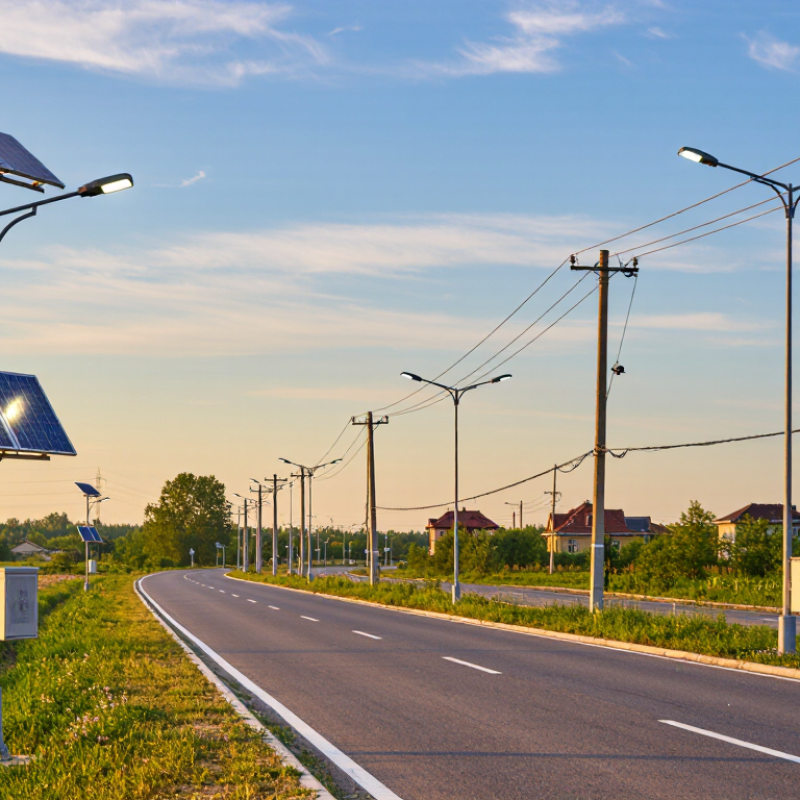
Solar street lights use photovoltaic panels to collect daylight, charge batteries, and power LED fixtures after dark. Their poles can operate without a nearby utility connection, but battery capacity, panel angle, shade, and several cloudy days affect reliability. Grid-powered street lights draw electricity through underground or overhead cables. They avoid on-site battery storage, yet depend on the local network and its connection costs. Both types commonly use LEDs; the power source is the main difference.
The International Energy Agency Photovoltaic Power Systems Programme reported more than 1.6 terawatts of cumulative global solar capacity by the end of 2023. That figure shows the scale of solar deployment, not the performance of any particular street light. The U.S. Department of Energy’s 2019 solid-state lighting forecast also modeled substantial electricity savings from wider LED adoption. LEDs matter in both systems, so comparing solar and grid lights by fixture efficiency alone can mislead. Look at the whole installation: winter sunlight, battery replacement access, cable trenching, and nighttime operating hours. A remote road may favor stand-alone solar. A shaded urban street may not. It is easy to overlook maintenance. Even a well-sized system can underperform when panels collect dust or batteries age faster than expected.
Solar street lights turn daylight into stored energy. A photovoltaic panel produces direct current, and a charge controller regulates power flowing into the battery. After dusk, a photocell signals the light to switch on. Some systems dim the LEDs when streets are quiet, then brighten them when movement is detected. No trench connection is needed. But cloudy days matter. Battery capacity, panel angle, and local winter sunlight all affect how long the lamp can operate. In practice, sizing is often less tidy than a catalog suggests.
Grid-connected street lights draw electricity through underground or overhead cables. A driver converts incoming power into the form required by the LED fixture. A photocell or timer controls operation, while the utility supply provides energy through long nights and cloudy weather. This arrangement can support steady output, but installation requires suitable wiring and careful load planning. A power outage can still leave a street dark. Maintenance teams should also check connections and protective equipment, not just the lamp.
Tips: Compare expected nightly hours with local sunlight records before choosing solar. For grid systems, check supply stability and cable access. Measure the actual street lighting needs; guessing can lead to dim corners or wasted capacity.
Solar street lights avoid trenching and monthly electricity charges, but their upfront price often includes panels, batteries, controllers, and poles. Grid-connected lights may cost less per fixture, yet excavation, cabling, permits, and utility work can raise installation costs. Compare the full project, not just the lamp. A short street with nearby power can favor grid lighting; a remote road may make solar more practical.
Performance depends on local conditions. Solar output falls during cloudy periods, while winter days provide fewer charging hours. Check the site’s sun exposure, required lighting hours, and battery autonomy before choosing a system. Grid lights deliver steadier power, although outages can still leave streets dark unless backup power is installed. Ask for verified light-distribution data, not only a headline brightness figure. Dark pavement and wide intersections need careful placement.
Maintenance differs, but neither option is maintenance-free. Solar panels need occasional cleaning, and batteries eventually lose capacity. Grid systems may require cable repairs, which can involve digging up pavement. That matters. In one real-world planning detail, a tree that shades a panel at dusk can reduce charging more than expected. I would also leave room in the budget for battery replacement; estimates sometimes look too optimistic. For a fair comparison, use the same service life, lighting schedule, and maintenance assumptions for both designs.
Illustrative cost per light in USD. Actual installation and maintenance costs vary by site, equipment, and local labor rates.
How to read this: This scenario estimates a solar light at $1,800 installed, with no grid electricity cost and $600 in 10-year maintenance, including a battery replacement allowance. The grid-connected light is estimated at $1,200 installed, plus about $400 for electricity and $300 for maintenance over 10 years. The energy estimate assumes a 60 W LED operating 12 hours nightly at $0.15/kWh. Solar performance depends on sunlight, battery sizing, and autonomy requirements; grid lights generally provide steady power when the utility supply is available.
China’s top street-light options are defined by more than brightness. Compare usable light on the road, not just advertised lumen figures. Check beam shape, color temperature, glare control, and spacing between poles. A narrow road needs different optics from a wide junction. Small details matter.
For solar models, inspect panel size, battery capacity, charge control, and stated autonomy during cloudy weather. Ask how performance changes after several nights with little sun. For grid-connected lights, check energy use, surge protection, dimming schedules, and access to replacement parts. Both types need suitable weather sealing and impact resistance. Look for clear test reports, not vague claims.
The pole, housing, and maintenance plan also define a strong option. Coastal air can corrode untreated metal, while dust may reduce panel output over time. Check whether technicians can reach the driver, battery, or wiring without special tools. A low purchase price can hide frequent service needs. One point is easy to miss: the “best” ten may change with road width, shade, traffic, and local repair capacity. Perfect comparisons are hard. Review the installation details before choosing.
Choosing a street light starts with the site, not the product label. Map pole locations, road width, mounting height, and areas where people need clear visibility. A narrow access road and a busy junction need different light distributions. Ask for photometric plans that show expected illumination between poles, not just a lumen figure.
Solar lights suit sites with reliable daytime sun and limited access to grid power. Check winter shading, local weather, battery capacity, and how many cloudy nights the system can support. A tree that seems harmless in summer may cast a long shadow in winter. Easy installation is useful, but battery replacement and cleaning still need a plan.
Grid-connected lights can provide steady output where power is dependable, though trenching and connection work may raise initial costs. Compare the full project cost: installation, energy, maintenance, and replacement parts over the expected service life. Check controls, surge protection, and the availability of qualified maintenance. Small details matter.
When the choice is unclear, test a few poles before ordering for the whole site. Measure light levels after dark and ask users where visibility feels weak. The first layout may be wrong; that is worth discovering early.
A photovoltaic panel converts daylight into direct current and stores energy in a battery. After dusk, a photocell switches on the LED fixture. Some systems dim the light when streets are quiet.
Battery capacity, panel angle, and local winter sunlight all matter. Several cloudy days can reduce operating time. Check local sunlight records, not just catalogue estimates.
Electricity travels through underground or overhead cables. A driver adapts the power for the LED fixture, while a photocell or timer controls operation. Outages can still leave a street dark.
Compare nightly operating hours with local sunlight for solar systems. For grid systems, check supply stability and cable access. Measure the street’s actual lighting needs.
Check usable road light, beam shape, color temperature, glare control, and pole spacing. A narrow road needs different optics from a wide junction. Lumens alone tell little.
Review panel size, battery capacity, charge control, and cloudy-weather performance. Ask how output changes after several low-sun days. The stated autonomy may need a closer look.
Coastal air can corrode untreated metal, and dust can reduce panel output. Check weather sealing and impact resistance. Make sure technicians can reach batteries, drivers, or wiring easily.
Frequent repairs can make a cheap fixture costly over time. Check replacement-part access and maintenance needs. Estimates still miss things. Recheck the installation details before deciding.
This guide compares solar and grid-powered street lights, explaining how each system works and where it is best suited. Solar lights generate and store energy from sunlight, offering independent operation and simpler installation where sunlight is sufficient. Grid-powered lights draw electricity from the local network and can provide consistent illumination, but usually require wiring and access to a power supply. The comparison considers upfront and long-term costs, lighting performance, reliability, maintenance needs, and site conditions.
It also outlines the features to evaluate when reviewing China’s top 10 street light options, such as brightness, energy efficiency, battery capacity, materials, controls, and ease of upkeep. How to choose between solar and grid-powered street lights depends on the project’s location, available infrastructure, sunlight, budget, desired operating hours, and maintenance resources. Matching these factors to the intended use can help project planners select a practical, dependable lighting solution.
Star Lighting