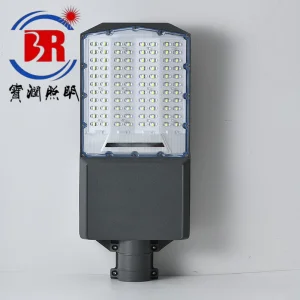
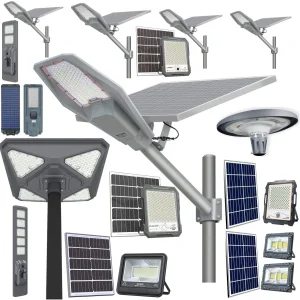
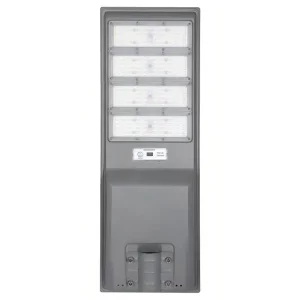
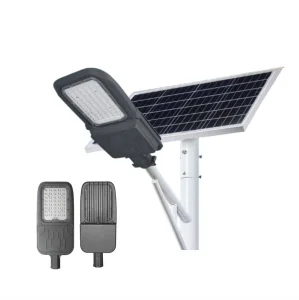
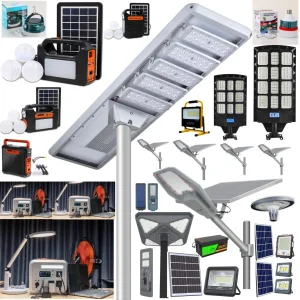
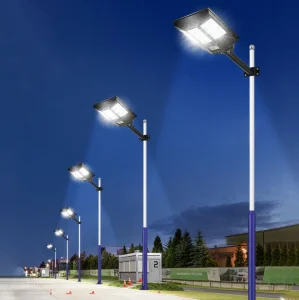
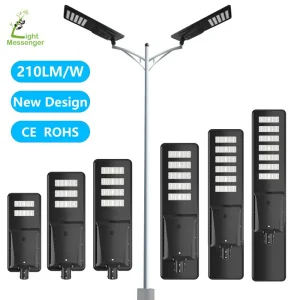
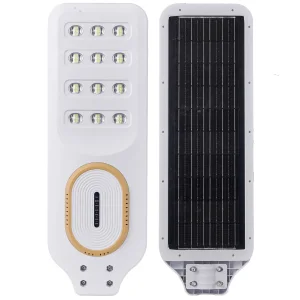
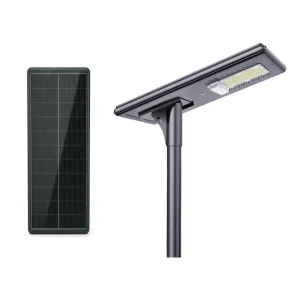
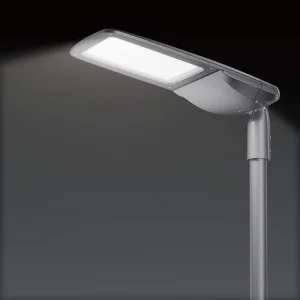
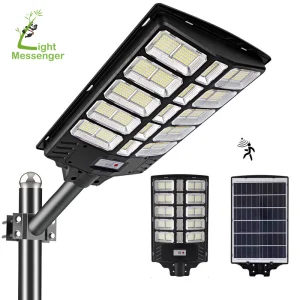
Innovative designs featuring advanced LiFePO4 battery integration and high-lumen output.
Analyzing the shift from traditional energy to smart, autonomous solar power systems.
The global outdoor lighting industry is witnessing a seismic shift towards Lithium Battery Solar Street Lights. As urban centers strive to meet carbon-neutrality targets and remote regions seek reliable off-grid energy, the demand for lithium-powered solutions has skyrocketed. Unlike traditional lead-acid or gel battery systems, lithium technology—specifically Lithium Iron Phosphate (LiFePO4)—offers a lifecycle of over 2,000 deep-discharge cycles, significantly reducing the Total Cost of Ownership (TCO) for municipal and industrial projects.
Currently, the market is segmented into "All-in-One" integrated systems and "Split" designs. Major regions like the Middle East (GCC), Africa, and Southeast Asia are the primary growth drivers, fueled by high solar irradiance and the need for infrastructure modernization. Governments are no longer just looking for a "light bulb on a pole"; they are seeking Smart City integrations, where solar street lights serve as nodes for IoT sensors, environmental monitoring, and 5G connectivity.
Innovation isn't just a buzzword; it's the core of modern street lighting engineering.
Maximum Power Point Tracking (MPPT) allows for 30% higher charging efficiency compared to traditional PWM controllers, especially during overcast days.
Moving away from ternary lithium, factories are prioritizing LiFePO4 for its high thermal stability and safety in extreme hot climates like Africa and the Middle East.
Microwave and PIR radar sensors coupled with remote monitoring via Zigbee or LoRaWAN allow for real-time light management and energy saving.
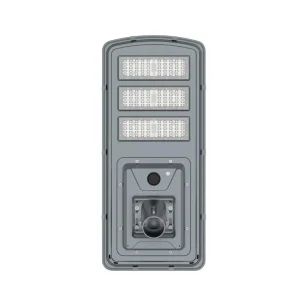
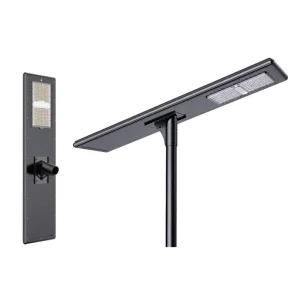
One of the most significant trends is the Miniaturization and Integration. Modern "All-in-One" designs house the solar panel, LED engine, lithium battery, and smart controller in a single robust ABS or Aluminum alloy chassis. This drastically reduces installation costs—often the most expensive part of a street lighting project—as no heavy machinery or extensive cabling is required.
Supply chain dominance and technical expertise from the world's solar hub.
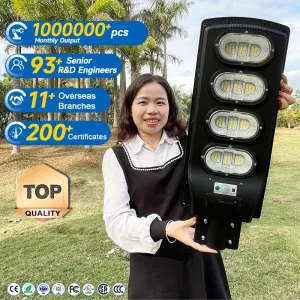
China remains the undisputed leader in solar street light manufacturing, producing over 80% of the world's supply. The advantage of a Chinese factory lies not just in price, but in the complete ecosystem. From high-efficiency monocrystalline silicon wafers to Grade-A EV-standard lithium cells, everything is produced within a 100km radius.
Jiangsu Star Lighting is an integrated urban lighting service provider that integrates product research and development, lighting design, production and manufacturing, engineering implementation, and service operation and maintenance. Based on the principle of harmonious unity between lighting and the environment, we produce aesthetic and ornamental road and square landscape products.
Our business scope includes solar street lights, LED street lights, smart street lights, intelligent control systems, wind-solar complementary lights, and comprehensive traffic facility engineering.
Versatility across diverse environments and industrial needs.
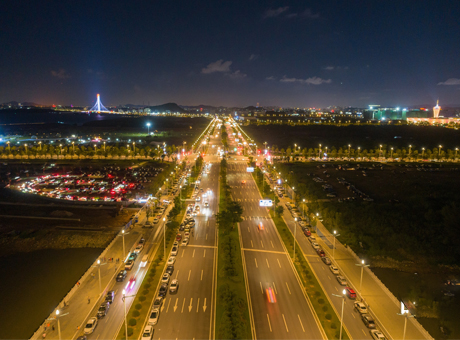
Replacing high-pressure sodium lamps with solar LED systems to reduce municipal energy bills by 100%.
High-power (200W-500W) floodlights and street lights for large-scale logistics centers and mining operations.
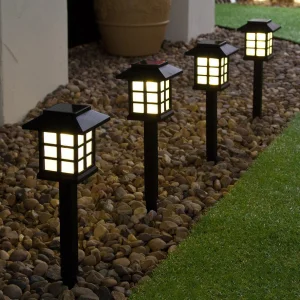
Cost-effective All-in-One lights for village pathways, gardens, and courtyards, focusing on security and aesthetics.
Ensure you partner with an authoritative factory that guarantees long-term reliability.
1. Battery Chemistry: Demand LiFePO4 over cheaper Ternary Lithium for longevity and safety in high-heat zones.
2. Luminous Efficiency: Look for LEDs with 170lm/W to 210lm/W to ensure maximum light output for minimum energy.
3. Housing Material: High-pressure die-cast aluminum is preferred for heat dissipation and salt-spray resistance.
4. Controller Intelligence: MPPT controllers with dimming profiles help the battery last through multiple rainy days.
5. Customization (OEM/ODM): Can the factory provide 3D designs and photometric files (IES) for project bidding?
6. Production Capacity: Ensure the factory has CNC bending and automated welding for uniform quality across large orders.
7. Certifications: CE, RoHS, ISO9001, and IP66/67 ratings are non-negotiable for international trade.
8. Warranty Support: A credible factory offers 3 to 5 years of replacement warranty on the battery and LED components.
9. Lead Times: Proximity to major ports like Shanghai or Ningbo ensures efficient global logistics.
10. Technical Support: Post-sale installation guidance and dialux simulation services.
What B2B buyers and project contractors are prioritizing in 2025.
Professional buyers are moving away from "lowest price" sourcing to "Value-Engineering". In regions like Latin America and Southeast Asia, procurement officers are prioritizing "Tool-Free Maintenance" and "Modular Design," where a battery or LED chip can be replaced without taking down the entire light pole. This significantly lowers long-term maintenance costs. Furthermore, there is a massive surge in demand for Smart Control Systems. These systems allow operators to dim lights via a web platform, receive real-time fault alerts, and optimize energy usage based on pedestrian traffic.
As a leading exporter, Jiangsu Star Lighting Technology Co., Ltd. addresses these needs by offering 5-year warranties, CE-rated components, and Smart IoT nodes integrated directly into our "All-in-Two" and "All-in-One" designs.
High-performance models ready for global export.
 Star Lighting